Case study
City of Osijek
Traffic and communal enforcement across the city, from AI detection to the issued fine, in one system.
- Client
- Administrative Department for Communal Services and Traffic
- In production
- Since October 2025
- Deployment
- On premises, running around the clock
- Scope
- 40+ fixed cameras and one mobile unit
- 40+
- fixed AI cameras
- 1
- mobile unit inside an enforcement vehicle
- 70,253
- cases processed, as of September 2026
- 24/7
- continuous operation
On the map
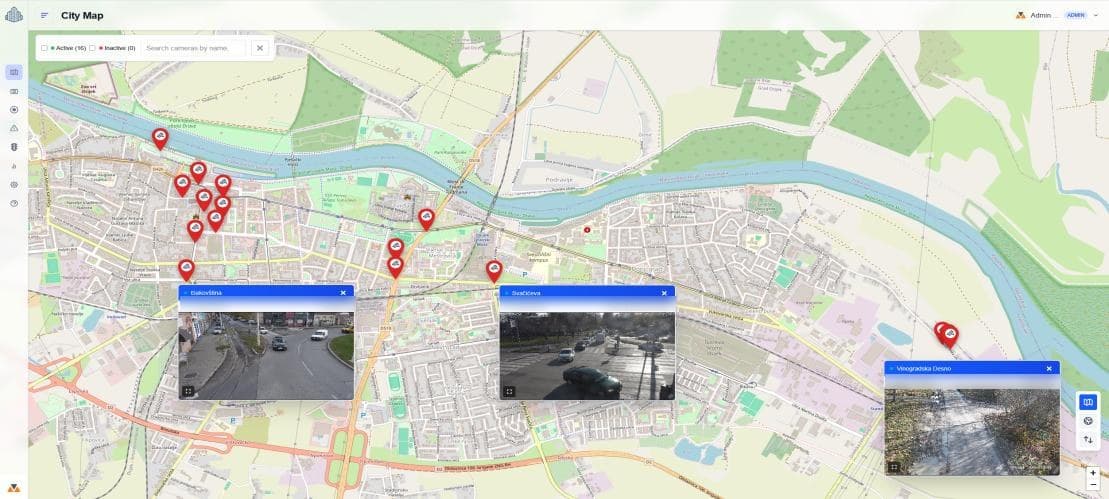
Every camera, on the city map
Operators see every location on one map and open any camera live, without logging into a separate system. Detections carry their position, so each case arrives already placed.
Osijek · city centre
45.5605° N · 18.6845° E
Before the platform
The city had camera coverage. What it did not have was a way to act on what the cameras saw.
What runs in Osijek today
In production- 01Detection of stationary vehicle violations
- 02Detection of traffic load on main roads
- 03Monitoring of illegal waste dumping
- 04Case management software for officers, covering the full misdemeanor procedure
- 05A mobile unit inside an enforcement vehicle, designed and built by MII, detecting violations while driving
- 06All cameras on the city map, with parallel live streams
This is the complete list. Other adapters described on the platform page are not part of the Osijek deployment.
Officer software
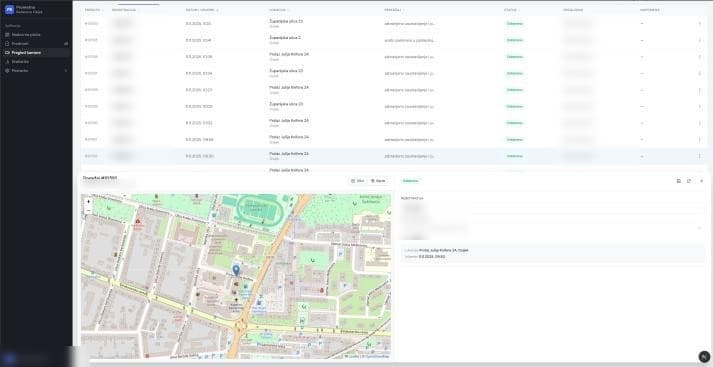
From detection to the issued fine, in one interface
- 01
Dashboard
Operational overview, urgent actions, cases by status.
- 02
Case list
Every case, with filters and fast access.
- 03
Case verification
Footage, plate, location on the map and the fine, on one screen. The officer confirms. The system does not decide.
Mobile unit
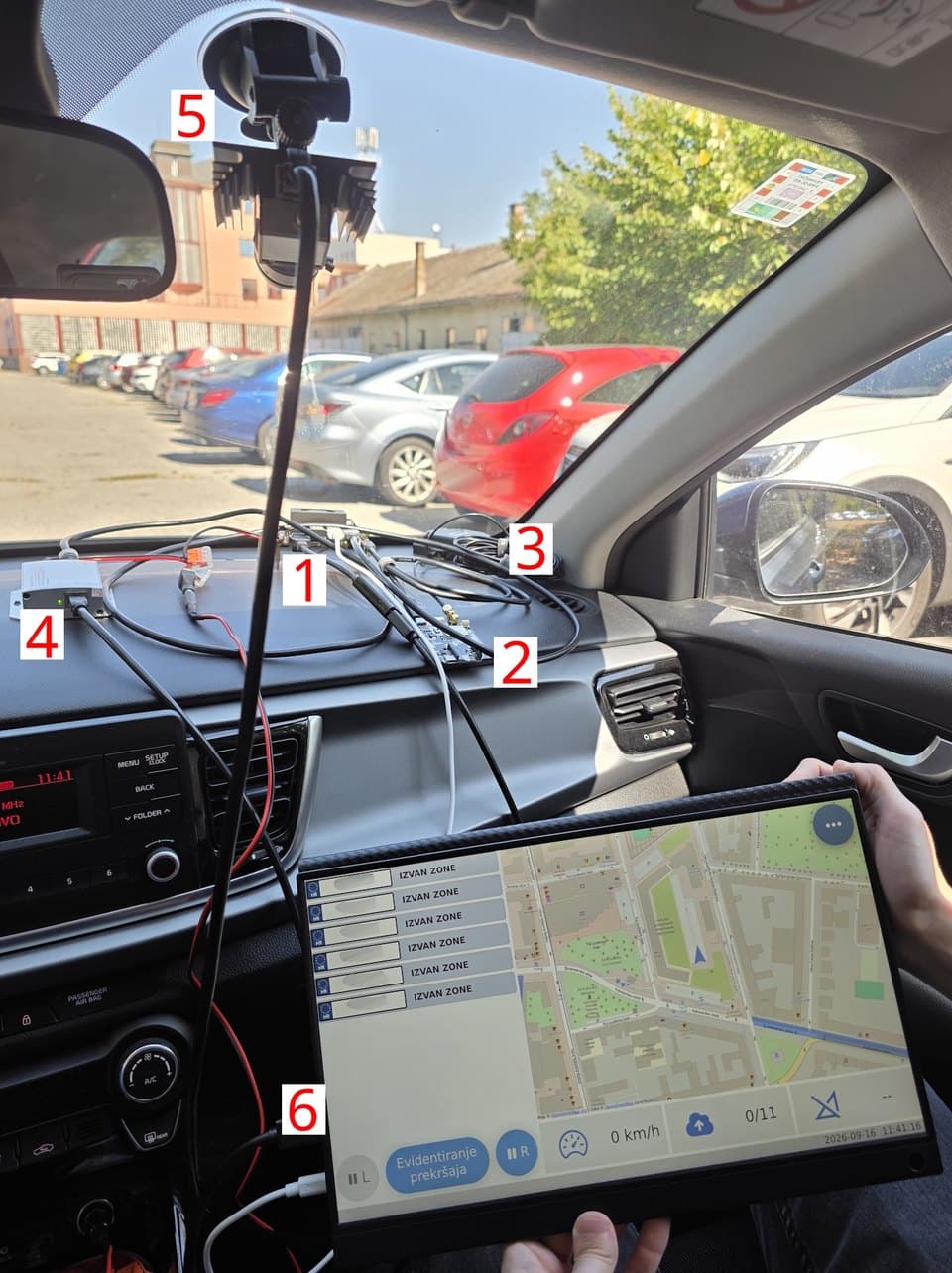
Built from scratch, not integrated
An industrial camera inside the patrol vehicle, an edge computer, RTK positioning and our own models, all designed by us. It reads plates as the car drives, places each one in a regulated zone on our map, and leaves the decision to the officers.
81 → 32 min
a typical day of patrol and ticketing in the Tvrđa pedestrian zone
How it is run
On premises
On infrastructure under the city’s control.
Around the clock
Continuous operation, with archive and analytics.
Want to see it running?
We can show you the system in operation, and how the same platform would fit your cameras and your procedures.